

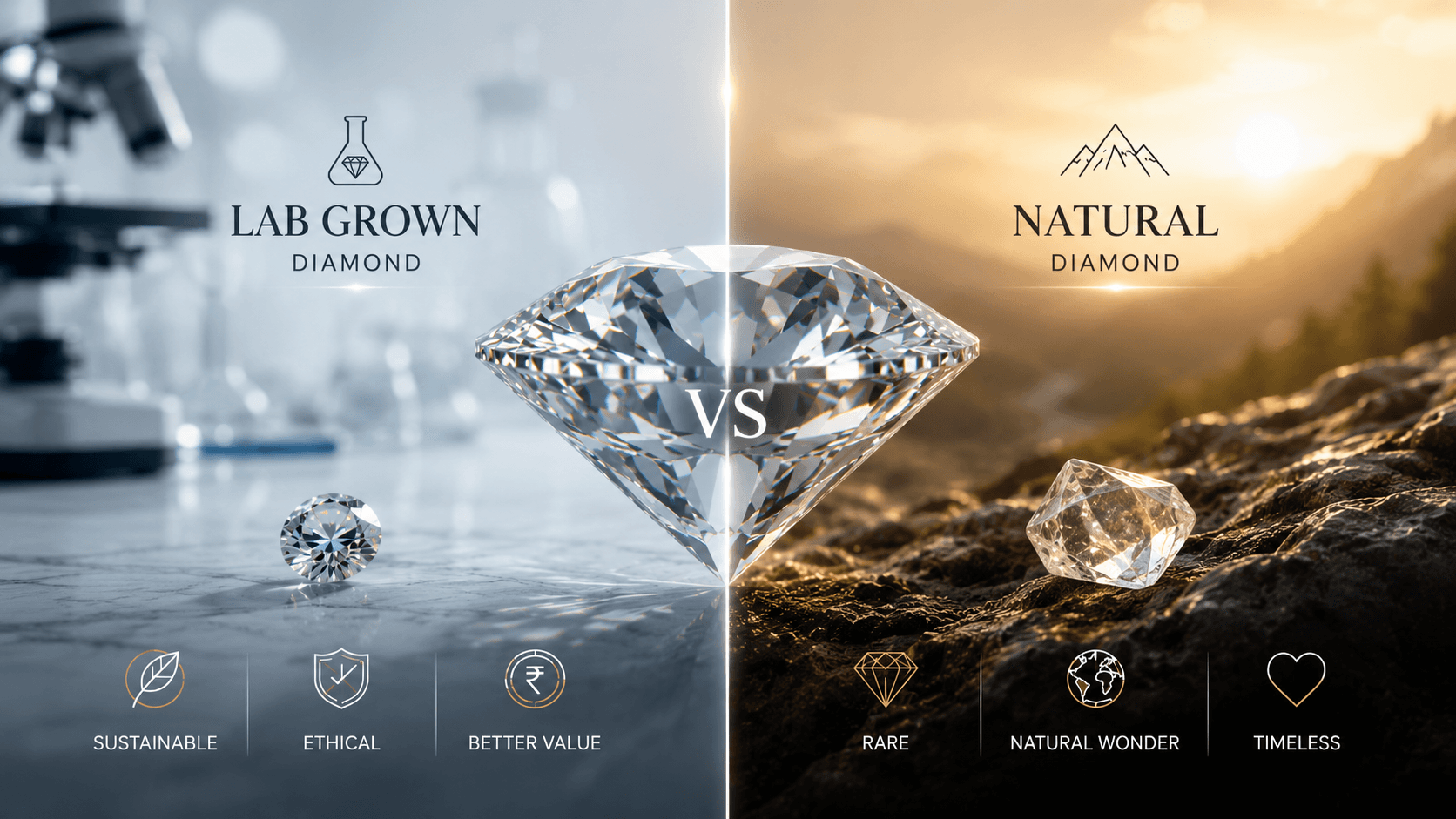

If someone placed a natural diamond and a lab-grown diamond side by side, would you know which was which? Most people wouldn't. Yet that single difference in origin is changing one of the world's oldest industries.
Earlier, the focus was mostly on design trends, pricing, and sourcing. Today, another question is shaping collection planning for jewelry businesses around the world. Should the next collection feature natural diamonds, lab grown diamonds, or both?
The answer isn't as straightforward as it once seemed.
Consumer habits have changed. Before making a purchase, buyers are analyzing much more than just cut, clarity, and carat.They want transparency, flexibility, and products that align with their goals. Brands are adjusting to these demands.Naturally, brands are adapting to those expectations.
What's interesting is that this shift hasn't pushed natural diamonds aside.Instead, it has created room for lab grown diamonds to establish their own place in the market.
A few retailers now have both so you can select and choose depending on budget, purpose and choice. Rather than being limited to one or the other.
That transformation is more than just retail. The manufacturers are extending their capabilities, and the sourcing techniques are evolving. The private label companies are developing collections that appeal to more than one client category.
Jewelry brands are no longer just about choosing a product. It’s about knowing where the market is going and creating collections that are relevant as client needs evolve.”
Are Lab Grown Diamonds Real?
If someone claims they can spot a lab grown diamond just by looking at it, take it with a pinch of salt. Even experts rely on specialised equipment to determine a diamond's origin
This is probably the biggest misconception surrounding lab grown diamonds, especially among first-time buyers.
These are real diamonds, not imitations like cubic zirconia or moissanite. They are chemically identical, physically identical and just as exquisite as natural diamonds.
The only real difference is where they come from.
Natural diamonds evolved deep inside the Earth billions of years ago. Lab grown diamonds have been produced in advanced labs that reproduce the natural growing conditions with modern technology.
Once the diamond has formed, the remaining process looks much the same. Skilled craftsmen cut, polish, certify, and set it into jewelry, just as they would a natural diamond.
That's why the question shouldn't be whether lab grown diamonds are real.
A better question is whether they match your expectations, your budget, and the reason you're buying a diamond in the first place.
Why More Buyers Are Choosing Lab Grown Diamonds
Many people first consider lab grown diamonds because of their price.
Today's buyers spend more time researching before making a purchase. They compare certifications, quality, origin, and long-term value before deciding which diamond feels right for them.
That shift in buying behaviour has made lab-grown diamonds far more mainstream than they were a decade ago.
For example, someone shopping for an engagement ring may decide they'd rather choose a larger diamond with an excellent cut than pay a premium simply because the stone was naturally mined. Others may prefer a natural diamond because they value its rarity and the story behind it.
Both decisions are perfectly valid.
Lab grown diamonds have made luxury accessible to many customers. Instead of making compromises they are choosing unique designs, larger stones and statement pieces that are more reflective of their own personality.
Lab grown diamonds vs natural diamonds is not a case of picking a winner. It’s about recognizing what each alternative brings to the table, and choosing the one that meets your goals.
This shift is not only for customers.Jewellery stores are expanding their offerings, and suppliers are responding to the demand for natural and lab-grown options.
Where Natural Diamonds Continue to Stand Out
While lab grown diamonds have become increasingly popular, natural diamonds continue to hold a special place in fine jewelry.
Their biggest advantage isn't appearance. To the naked eye, both options look virtually identical.
Natural diamonds are unique, because they are rare.
Nature cannot reproduce natural diamonds on demand, having taken billions of years to make each one through geological processes.
That history, for many buyers, provides the stone an emotional significance that extends beyond its physical attributes.This is why natural diamonds are typically chosen for heirloom jewelry, milestone celebrations, and pieces families wish to pass down through generations.
To some, that story is worth paying a bit more for. For others, it’s about the ability to possess a gorgeous diamond without breaking the bank.
Neither perspective is wrong, and that's exactly why today's market has room for both.
So, Which One Offers Better Value?
This is usually where people expect a simple answer.
Natural diamonds are better.Or lab-grown diamonds are better.
In reality, it doesn't work like that.
Value means different things to different people.
For one buyer, value could mean owning something that took billions of years to form beneath the Earth's surface. For another, it could mean getting a beautifully cut diamond that's visually identical while staying comfortably within budget.
That's why lab grown diamonds vs natural diamonds isn't really a battle. It's a question of priorities.
If your budget allows you to choose between a one-carat natural diamond and a larger lab-grown diamond with a better cut or clarity, neither decision is automatically the smarter one. It simply depends on what you'll appreciate long after you've left the jewelry store.
Interestingly, this is exactly how many jewelers approach the conversation today. Rather than convincing customers to choose one category, they're helping them understand the trade-offs and decide what feels right for their purchase.
A diamond bought for everyday wear may not be judged by the same standards as one intended to become a family heirloom. That's an important distinction, and it's often overlooked.
A Quick Comparison
| If you value... | You may prefer... |
| Rarity and natural origin | Natural diamonds |
| More flexibility within your budget | Lab grown diamonds |
| A larger stone for the same spend | Lab grown diamonds |
| Heritage and collectability | Natural diamonds |
| Modern fine jewelry with greater design freedom | Either, depending on your priorities |
No comparison table can make the decision for you, but it does highlight one thing. Both categories solve different needs, and that's exactly why they're growing side by side instead of replacing each other.
One Industry Decision That Got Everyone Talking
If there's one example that shows how quickly the market is evolving, it's Pandora.
Pandora Jewelry’s announcement that it would convert its diamond collections to lab-grown diamonds generated waves across the industry. It wasn't only that a prominent brand had a new product. That was because the move signaled a major change in customer demand.
Pandora’s strategy was about making diamond jewellery more accessible, while also promoting its sustainability ideals.
Unsurprisingly, the announcement aroused attention beyond the retail sector.
The Natural Diamond Council (NDC) highlighted the timeless appeal of natural diamonds, emphasizing their emotional significance, rarity, and natural origins.
Rather than turning into a dispute about which category was “better,” the conversation revealed something more interesting.
The diamond market is no longer moving in one direction.
Some customers will always choose natural diamonds because they value their story and exclusivity. Others are perfectly happy choosing lab grown diamonds because they see greater value in what they receive for the price.
Both viewpoints exist today, and successful jewelry brands are learning to serve both instead of forcing customers to choose one over the other.
The Bigger Shift Is Happening Behind the Scenes
The rise of lab grown diamonds is not only changing consumers preferences. It is also transforming how jewelry brands plan, source and construct their collections.
Many businesses that once focused on a single category now offer both natural and lab-grown diamonds. It's a practical response to a market where customer expectations vary.
That shift has also changed what brands expect from a diamond jewelry manufacturer.
Working with an experienced custom jewelry manufacturer makes it easier to bring new ideas to market while maintaining consistent quality. For brands developing private label collections, Kays Diamonds' custom manufacturing service is one example of how design concepts can be transformed into production-ready jewelry.
India remains an essential sourcing location for many worldwide firms. Choosing the best jewelry manufacturer in India gets you access to skilled craftsmanship, flexible manufacturing and the flexibility to react to a constantly changing market.
Conclusion
The diamond debate is not a choice of which is better anymore. Natural diamonds are still rare and heirloom, whereas lab grown diamonds are about adaptability, creativity and affordability. Instead of competing for the same space, both are helping to define the future of fine jewelry in their own ways.
The true opportunity for jewelry manufacturers is to understand what their clients value and develop collections that reflect those expectations. Markets are continually changing, and companies who try to adapt will always be better off than those that merely follow the trends.